
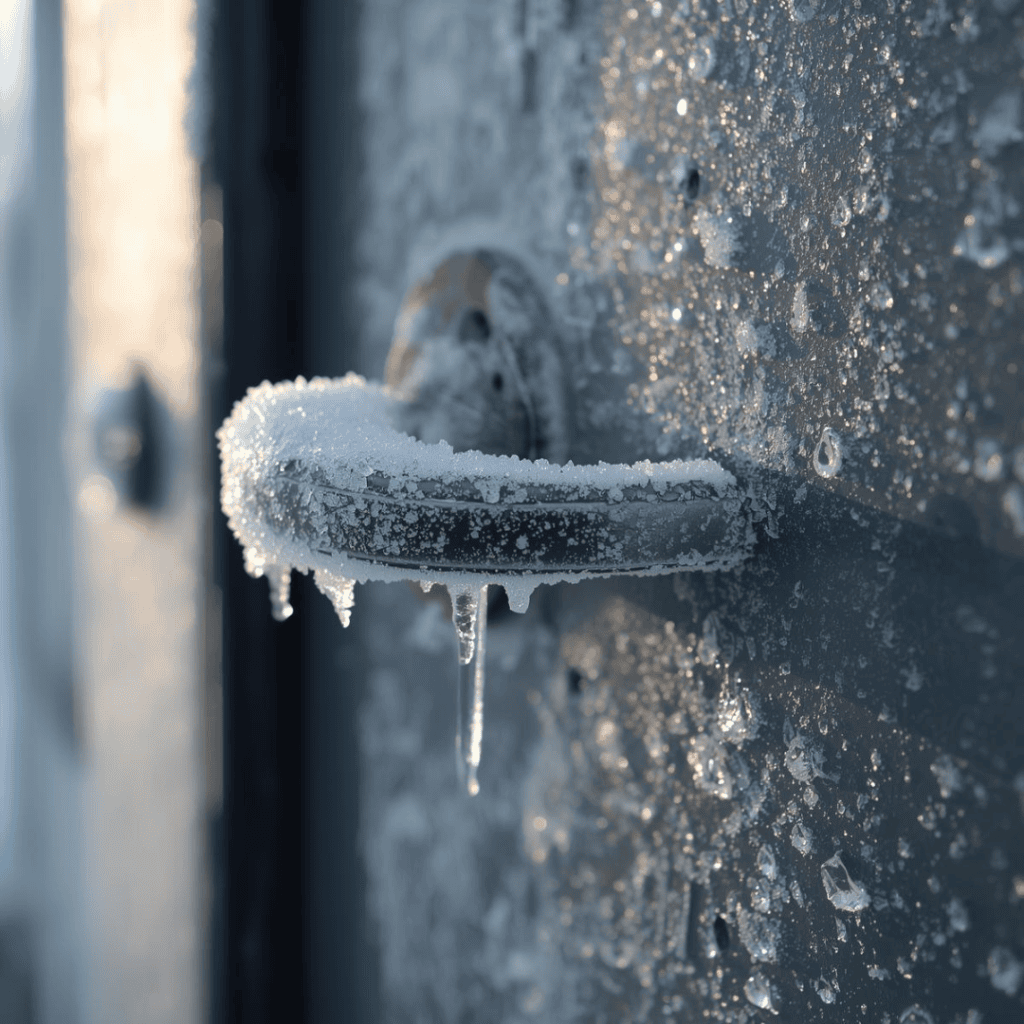
When temperatures drop fast, moisture inside a lock can freeze. This is common during polar vortex conditions, especially with outdoor door locks, padlocks, and older cylinders.
The good news: most frozen locks can be fixed at home easily.
Safe ways to unfreeze a frozen lock
1. Use hand sanitizer or rubbing alcohol
Alcohol melts ice quickly and evaporates fast.
How to do it:
- Apply alcohol-based hand sanitizer directly on the key
- Insert the key slowly and gently
- Repeat if needed
⚠️ Don’t force the key — that’s how keys snap.
2. Heat the key (carefully)
This works well when ice is deep inside the cylinder.
How to do it:
- Heat the key with a lighter or match (warm, not red hot)
- Insert it gently
- Repeat 2–4 times if needed
Wipe the key before inserting to avoid burns.
3. Use a commercial lock de-icer
Aerosol lock de-icers are designed specifically for frozen locks and work almost instantly.
If you live somewhere with harsh winters, keeping one in your bag or car is a good idea.
4. Use a hairdryer or heat gun
Best for home doors.
How to do it:
- Apply steady heat directly to the lock
- Avoid overheating the surrounding door or handle
5. Use WD-40 (short-term fix)
WD-40 displaces moisture and can help free a frozen lock.
Note:
This works well in emergencies but isn’t a long-term lubricant.
Prevent frozen locks in the future
A little prep goes a long way:
- Apply lubricant before winter (graphite or light oil)
- Use WD-40 or de-icer after extreme cold snaps
- Cover outdoor locks when possible
- Lightly coat the key with petroleum jelly to repel moisture
When to call a locksmith
If the lock still won’t turn after thawing, or the key feels like it might break, it’s time to call a locksmith.
Trying to force it can permanently damage the cylinder.
**Today’s blog post is shared for helpful information only — we don’t repair locks, but we do copy keys, key fobs, and garage door openers, but thought this might still be useful.

Recent Comments